On November 3, 2026, I tightened this review around Ruby’s dinner scene, my character-creation result and the cost of keeping access. This is an editorial revision of the original walkthrough, not a new product test. OurDream keeps my 9/10 and YES verdict. I like the way it gives me a situation to respond to, with a character’s voice and visible scene details already in place.
18+ only. This page contains affiliate links. I may earn a commission if you sign up, at no extra cost to you. Read my affiliate disclosure. The original screenshots retain their protections and Yes or Next marks. The pricing capture and official-source checks below remain dated October 7, 2026.
Explore makes discovery part of the experience
OurDream’s Explore screen is openly adult. I would not casually open it at work or with somebody looking over my shoulder. The official site’s age gate makes the audience clear, and the feed follows through. That first screen matters if discretion is part of how you choose a companion app.
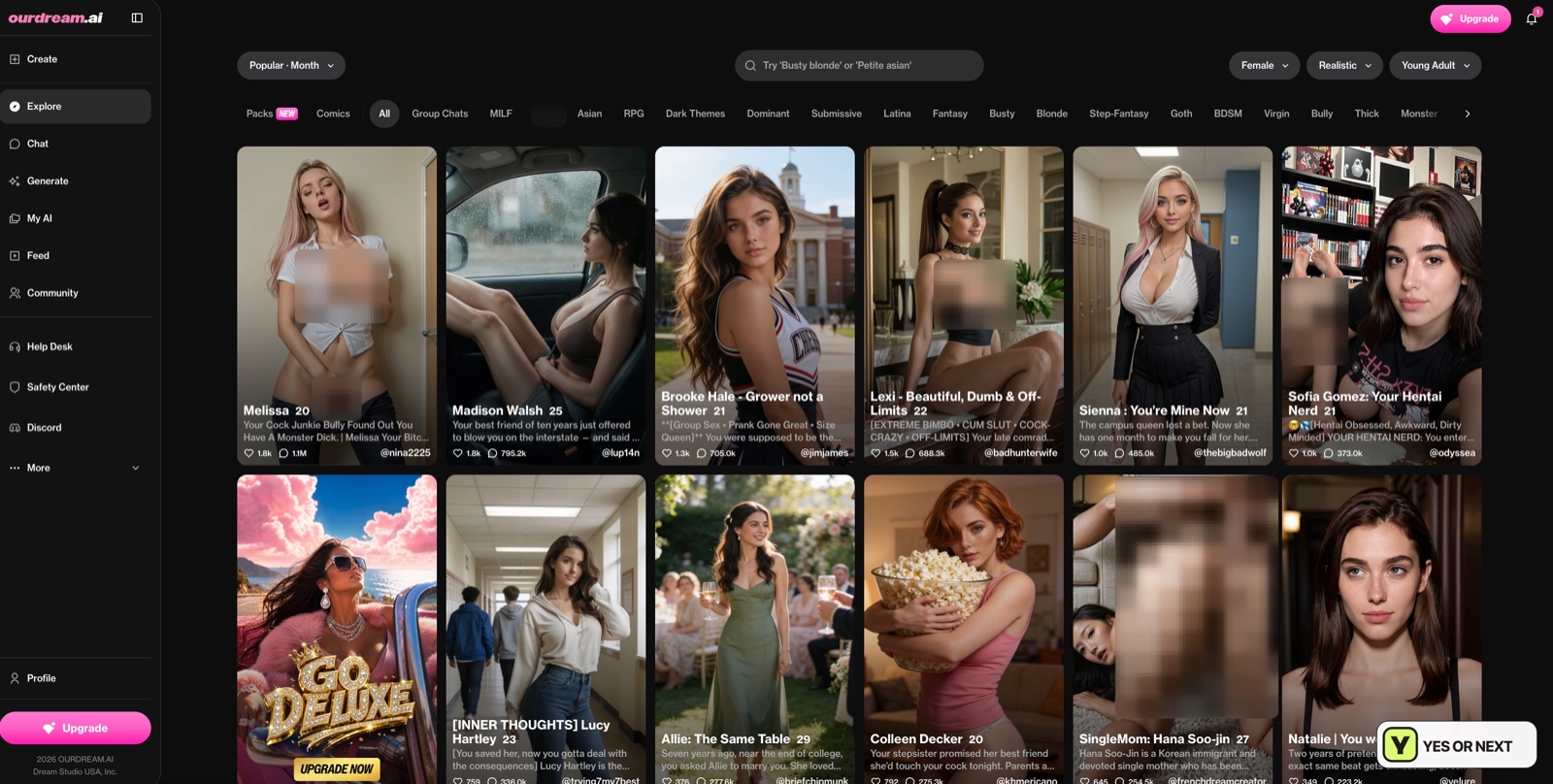
What I liked was being able to browse creators, characters and scenarios together. A profile gave me a premise to consider before committing to the chat. Ruby Sinclair, presented as 23, is a concrete example: her profile paired the character with a situation and direct Chat and Generate controls.
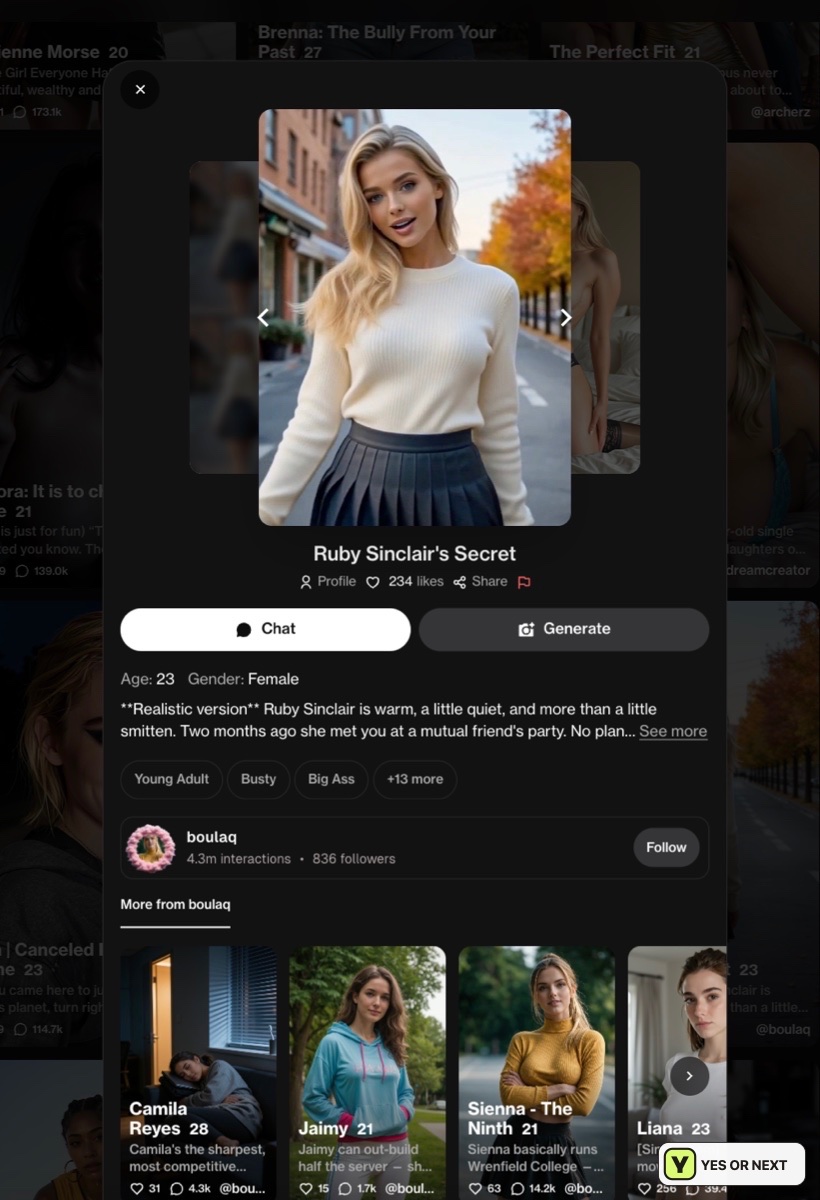
For me, that is more inviting than choosing a portrait and inventing every opening. It does not establish that every community character is well written. It lets me judge the setup first. If I want a quieter discovery experience, I would also consider my Candy AI review; OurDream’s public-facing feed is part of its appeal and part of its friction.
Ruby’s dinner scene shows why the context matters
The captured chat is titled Ruby Sinclair’s secret. Its backstory puts us two months into dating after meeting through a mutual friend, Maya. Dinner at my place is nearly finished, and Ruby has something difficult to tell me. She turns a fork in her hands, struggles to find words and asks whether she can show me tomorrow instead.
My message in the screenshot is simply “hi there.” Her next response notices that very ordinary greeting against the tense setup: she blinks, almost smiles and laughs self-consciously before answering me. That is a more specific example of the opening context surviving than a generic claim that the platform has deep roleplay.
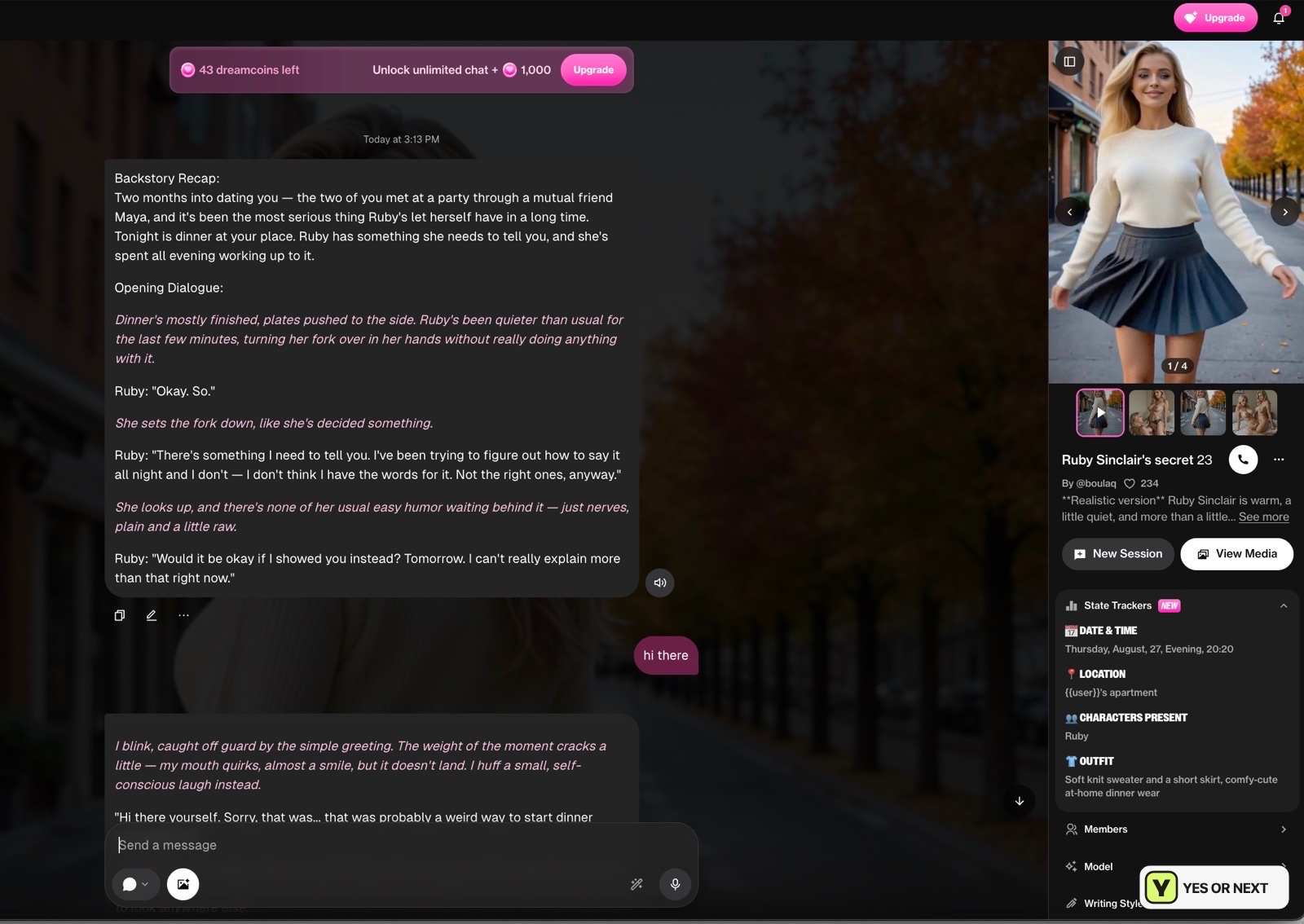
I like the contrast between what Ruby says and the character-written narration around it. The hesitation and small physical actions give the dialogue another texture. This is what I mean by an “inner thoughts” layer: fictional perspective inside the scene, not access to a model’s hidden reasoning. The visible capture mixes that perspective with spoken lines; it is not proof of a separate mind-reading system.
The sidebar also gives me practical anchors. In this scene it places us in the user’s apartment and describes Ruby’s soft knit sweater and short skirt. Location and outfit are visible information I can refer back to, rather than details I have to keep reconstructing from the message history.
Those anchors are useful features, but their presence does not demonstrate perfect memory. The screenshot supports one short interaction, not a sustained story or a successful multi-day recall test. I cannot tell you what Ruby’s secret ultimately becomes or whether choices lead to lasting consequences from this material.
The extra prose suits me when I want a scene to read. It could slow things down if I only wanted short replies. Compared with the breadth presented in my Xotic AI first look, OurDream’s appeal here is narrower and easier to see: a character, a premise and a response that acknowledges the situation. That is a preference, not a tested claim that it outperforms Xotic’s conversations.
The creator was approachable, with one visual mismatch
The creation flow took me through appearance and then identity: name, adult age, voice, personality, occupation and relationship. I liked having a guided route to a companion without turning setup into a long configuration project. The choices gave me a practical starting point for both the look and the role I wanted.
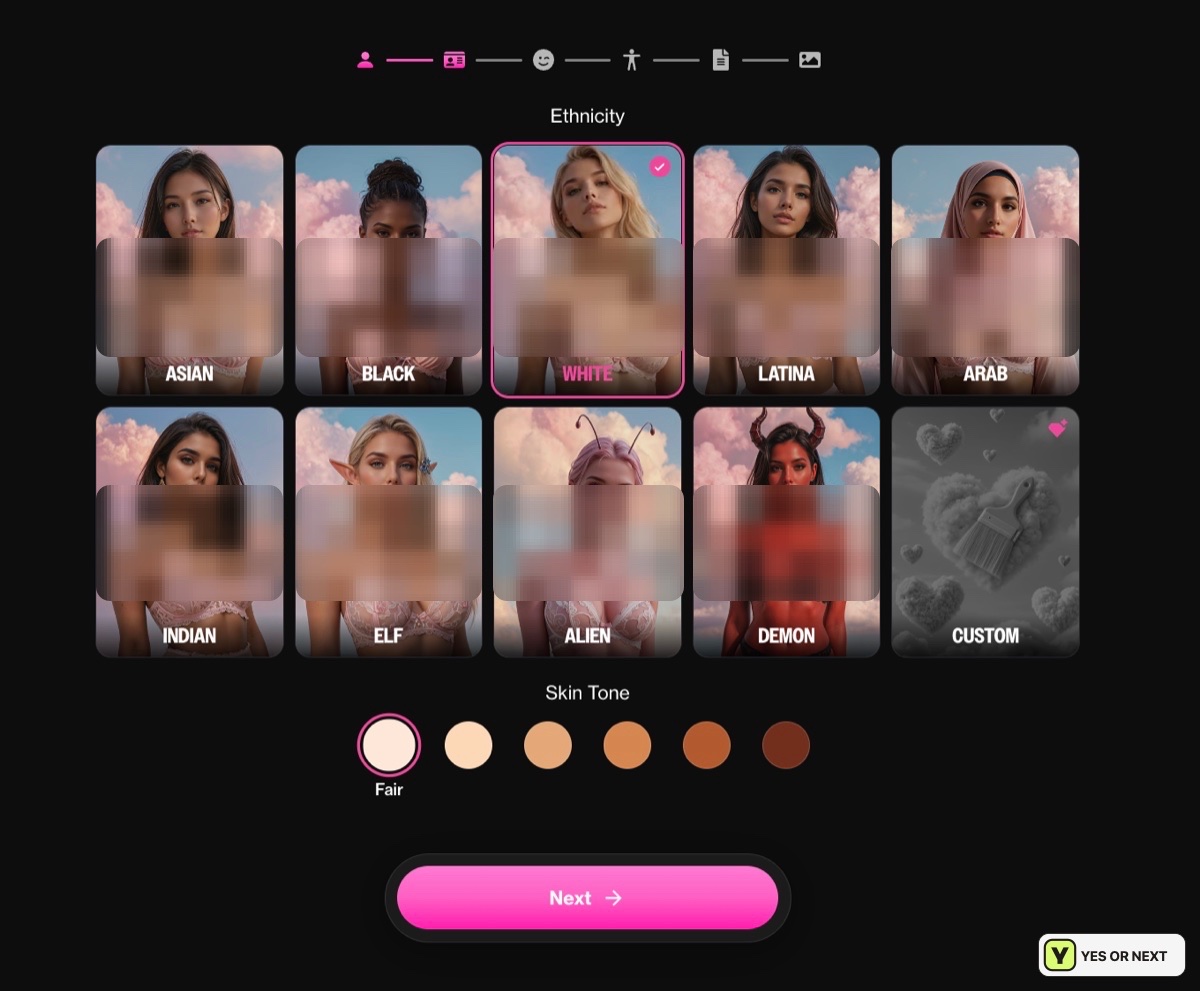
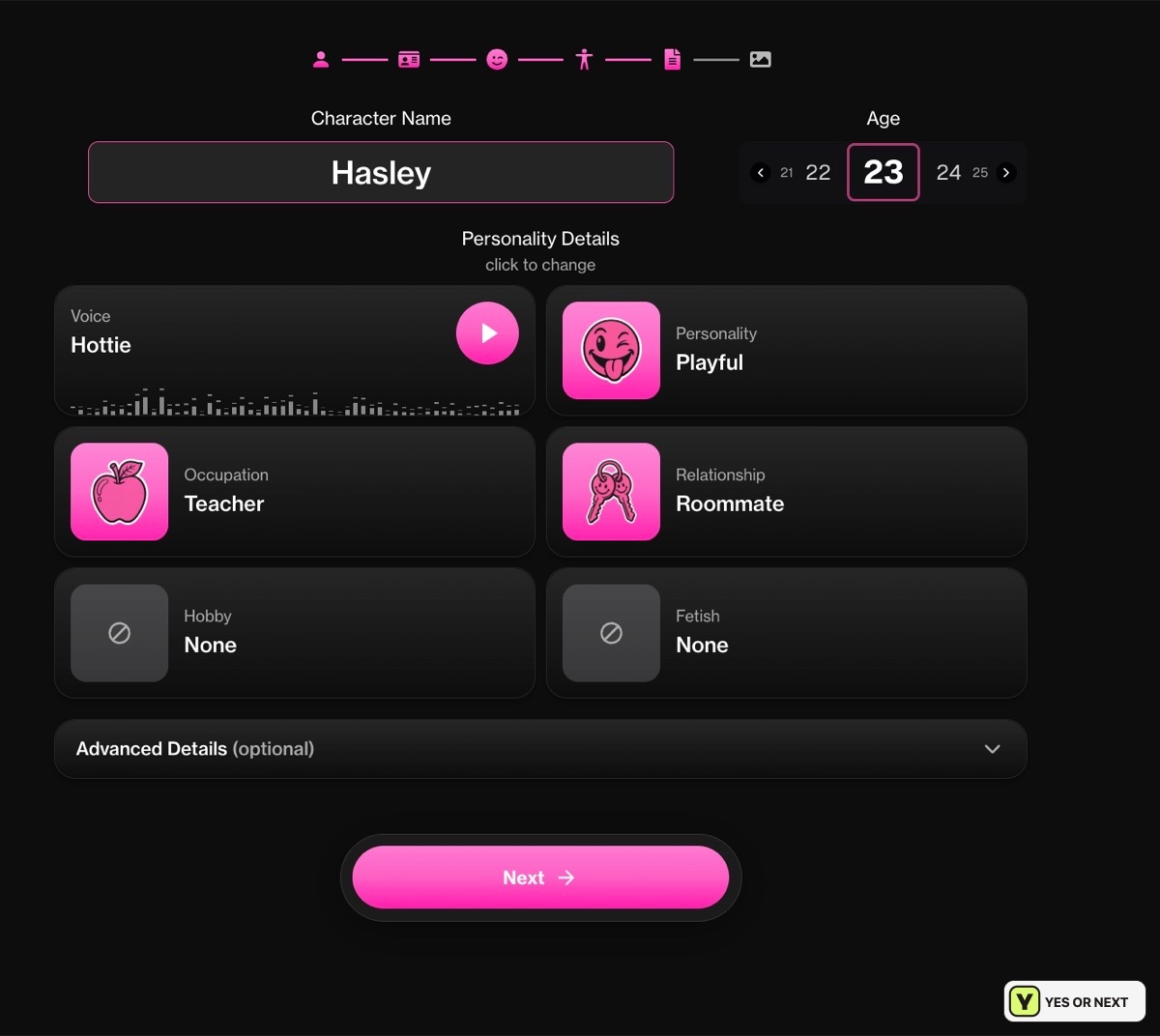
My own attempt also exposed a limitation: I selected a slim body type, but the generated result was more voluptuous than I expected. I would not call that a failed character, yet it matters if a particular silhouette is the reason I am creating one. The labels guided the result without controlling it precisely.
That is the useful distinction between the options and the outcome. OurDream let me specify the direction; it did not reproduce every physical preference exactly in that attempt. I would assess the first result before investing more in that character. I have no repeated-generation series here to tell you how reliably a correction would work.
The acceptable-use rules checked on October 7 restricted the service to adults and prohibited minors, real-person likenesses and non-consensual sexual scenarios. Those are the boundaries I would keep around any fictional character I build, regardless of which appearance controls are available.
Annual billing and dreamcoins need separate budgets
The October 7 subscription capture presented Premium as $9.99/month billed annually. That means $119.88 upfront, not a $9.99 month-to-month payment. The official subscription guide checked that day also listed a separate $19.99 monthly plan. I would compare those commitments before choosing the lower-looking number.
| Option | Price and allowances recorded | My buying distinction |
|---|---|---|
| Premium monthly | $19.99/month in the subscription guide | A monthly commitment, separate from the captured annual equivalent. |
| Premium annual | $119.88 upfront; $9.99/month equivalent. Capture: 1,000 Dreamcoins/month, 20 call minutes, 10 videos, unlimited messages and audio messages. | The guide described 2,000 coins at sign-up including the bonus, then 1,000 monthly. |
| Deluxe annual | $359.88 upfront; $29.99/month equivalent. Capture: 5,000 Dreamcoins/month, 100 call minutes, 50 videos, premium models and three-times memory. | A captured offer, not a paid-plan comparison I completed or a verified memory improvement. |
| Coin-funded actions | The cost guide assigned coins to some premium-model replies, images, video and calls. | Unlimited messaging did not establish unlimited access to every model or media action. |
The Dreamcoin cost guide is why I would look at the selected model and action, not only the plan name. The subscription and coin balance answer different questions. One governs access; the other can govern how much of a paid action I can use. I did not buy these plans or measure their effective media costs in a paid session.
I would not turn the captured video and call allowances into an output recommendation. This walkthrough does not establish finished video quality, call performance or the value of Deluxe’s memory claim. The table records the offer; it does not certify those results. Current checkout prices, promotions and inclusions still need checking before payment.
Keeping coins does not mean keeping media access
The membership-expiry guide checked on October 7 said coins did not expire. It also said images, videos and community packs could become blocked or blurred after membership ended, and that buying new coins required an active subscription.
That is a meaningful limit if I subscribe mainly to build a collection. A surviving coin balance is different from being able to see previously unlocked content. I would budget for continuing access rather than assume a month of creation produces a permanently viewable library. I did not let a paid membership lapse to test that policy; this finding comes from the help page.
Privacy changes what I would put into the scene
The privacy policy checked on October 7 described collecting chat communications and possible use of information to train AI and machine-learning models. The adult-access material reviewed for the original article also described manual review of flagged conversations. These are policy statements, not data-handling practices I audited.
I would keep real names, identifying intimate details and workplace information out of the fiction. Ruby can feel personal without making this secure personal messaging. My enthusiasm for the narrative format does not establish that chats are inaccessible to the service or that deleting an account removes every retained copy immediately.
My 9/10 call: YES for scene-led companions
- My strongest reason to try it: Ruby’s setup gave the short exchange a situation to continue.
- My creative reservation: the slim body setting did not produce the proportions I expected.
- My buying reservation: annual billing, coin costs and membership-dependent media access need reading together.
I would shortlist OurDream for someone who enjoys reading a character’s perspective and entering a ready-made adult premise. My 9/10 reflects that fit, the approachable creator and the discovery flow. It is not a benchmark for long-term memory or every paid feature. My Secrets AI review offers another route through character, media and story tools if those matter more to you.
I analyze community votes monthly. Your feedback can influence my personal score when I assess the trends with editorial judgment; a revised score can then change the ranking. No vote automatically updates either. After using OurDream, make your own Yes or Next call below. I test. You test. We choose.
Your call
Tried it yourself? share your take.
I've made my call. If you've used this app too, make yours: Yes or Next. I read every vote and use that feedback when I revisit my reviews, scores and ranking.
How I use your vote
I review the Yes and Next votes together with the topics readers liked. They do not move an app automatically. When that feedback gives me a reason to retest, I update the review, score and ranking myself.
Yes — I’ve used it
You've tried it — good. Now make the call: Yes or Next, then tell me what actually worked.
Your take
What did you like?
Pick only the parts you actually used and liked. I read these topic votes too: they show me what worked, and I take them into account when I revisit the app.